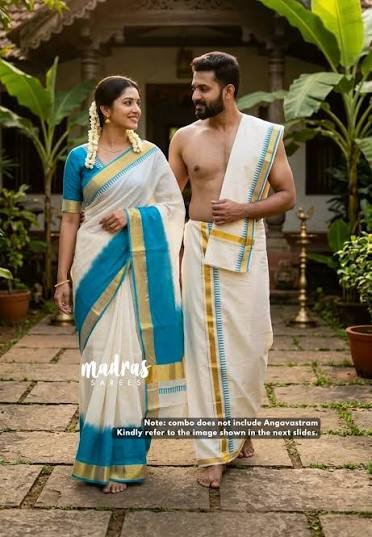
1. Tamil Nadu & South India: The Kanjeevaram Silk Saree & Veshti
In the temple towns of South India, religious rituals demand attire made of pure natural fibers—predominantly mulberry silk and unbleached cotton—symbolizing ritual purity (madi).
- Women’s Attire (Kanjeevaram Silk Saree): Woven in the historic town of Kanchipuram, Tamil Nadu, these heavy silk sarees feature contrasting zari borders infused with real silver and gold threads. The motifs are deeply religious, often depicting temple architectures (gopurams), peacocks, lotus flowers, and sacred peacocks. Worn during puja, temple festivals, and traditional wedding rituals, the Kanjeevaram is regarded as an auspicious offering to the divine.
- Men’s Attire (Veshti & Angavastram): Men traditionally wear a veshti (a pristine white or off-white unstitched cotton/silk cloth wrapped around the waist) paired with an angavastram draped over the shoulders. For high-temple rituals and pujas, unstitched garments are strictly mandated to maintain sanctity.
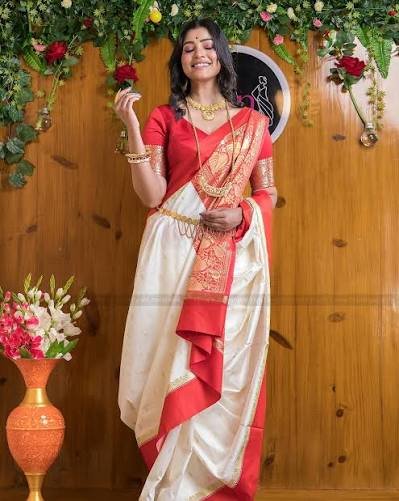
3. West Bengal: Gorod & Korial Sarees (The Sacred Red-and-White Drape)
In West Bengal, religious festivals—most notably Durga Puja and Kali Puja—are incomplete without the signature red-and-white traditional sarees.
- Symbolism & Design: The Gorod (made of un-dyed silk) and Korial (fine white silk with a deep red border) are considered the ultimate symbols of sanctity. The color white stands for purity and peace, while the deep crimson border signifies fertility, auspiciousness, and female power (Shakti).
- Ritual Significance: Women wear these pristine silk sarees during morning temple offerings, Anjali (floral prayers), and the Sindoor Khela ritual on Dashami, creating an iconic, devotion-filled spectacle across the state.
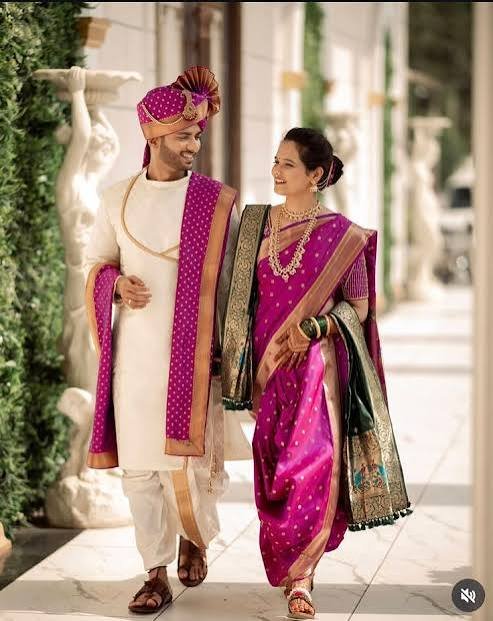
4. Maharashtra: Nauvari Saree & Pheta
In Maharashtra, major religious occasions like Ganesh Chaturthi, Gudi Padwa, and sacred pilgrimages to Pandharpur highlight the historical and spiritually significant nine-yard drape.
- Women’s Attire (Nauvari Saree): Also known as the Kashta saree, this 9-yard silk drape (frequently woven in Paithani silk with peacock motifs) is unique because it is draped in a trousers-like style without a petticoat underneath. This design allows total freedom of movement, historically worn by women in battle and today favored for sacred temple rituals, rituals near sanctums, and traditional folk dances.
- Men’s Attire (Dhoti, Kurta & Pheta): Men wear a silk or cotton dhoti paired with a kurta and complete the devotional ensemble with a Pheta (a traditional saffron, pink, or red turban), symbolizing honor and piety in the presence of the divine.