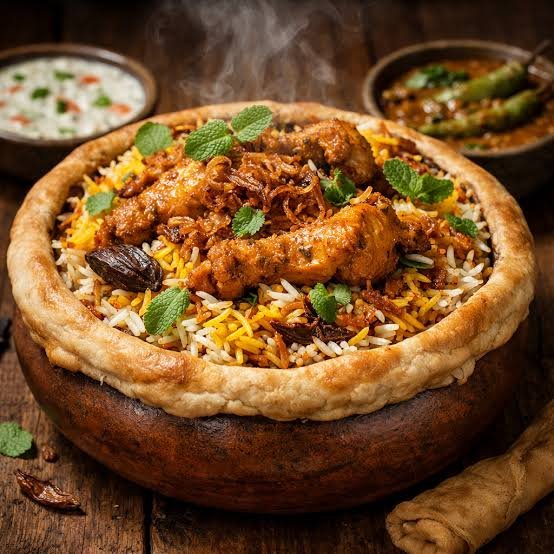
1. Hyderabadi Dum Biryani (Telangana)
The Legacy of Nizam Royal Kitchens
When discussing regional masterpieces of Indian cuisine, Hyderabadi Biryani stands tall as an undisputed global favorite. Originating in the royal kitchens of the Nizams of Hyderabad, this dish is a grand fusion of Mughlai cooking techniques and native South Indian spice profiles.
Flavors & Preparation
The hallmark of authentic Hyderabadi Biryani lies in the Kacchi (raw) Dum method. Unlike simpler biryanis where meat and rice are cooked separately before assembling, Hyderabadi Dum Biryani layers raw, marinated meat (marinated overnight in yogurt, raw papaya, ginger-garlic paste, and crushed spices) beneath partially cooked basmati rice. The pot is then sealed with dough to trap steam inside.
As it slow-cooks over low heat (dum), the rice absorbs the aromatic juices from the meat while remaining fluffy and separate. Key flavor components include saffron-soaked milk, caramelized onions (birista), fresh mint, coriander, and whole spices like star anise, mace, and cardamom.
How It Is Served
Traditional Hyderabadi Biryani is served piping hot alongside Mirchi Ka Salan (a tangy peanut and green chili gravy) and a cooling Raita (yogurt mixed with diced onions and herbs).
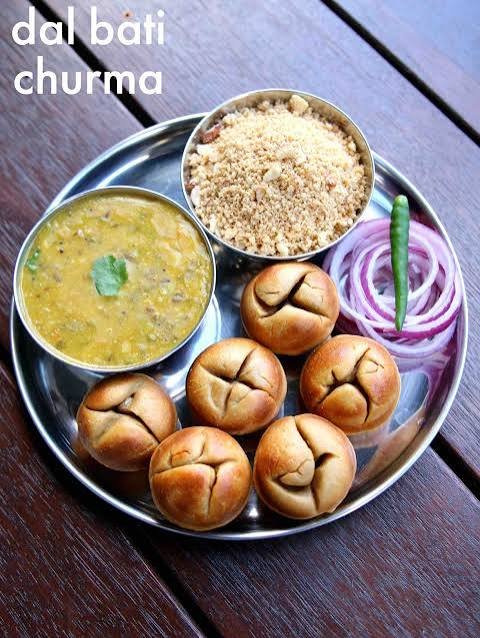
2. Dal Baati Churma (Rajasthan)
Desert Resilience in Every Bite
From the royal land of forts and deserts comes Rajasthan’s ultimate comfort food: Dal Baati Churma. Born out of necessity in the dry, arid climate of Rajasthan, this complete meal was designed by ancient desert warriors and villagers to withstand harsh conditions while providing long-lasting energy.
Flavors & Preparation
This signature dish is a triumphant trio of sweet, savory, and spicy elements:
- Baati: Hard, round dough balls made from whole wheat flour, semolina, and ghee. They are traditional baked over hot coals or dung cakes, then cracked open and drowned generously in pure cow ghee.
- Dal: A flavorful, slow-cooked lentil soup made from a blend of five pulses (Panchmel Dal), seasoned with cumin, asafoetida, cloves, dried red chilies, and ghee.
- Churma: A sweet accompaniment made by crushing warm baatis and cooking them with coarse wheat flour, ghee, cardamom, chopped nuts, and jaggery or powdered sugar.
How It Is Served
The meal is traditionally eaten by crushing the baked Baati into a bowl, drenching it with hot Panchmel Dal, adding a spoonful of ghee, and eating it alongside a serving of sweet Churma and spicy garlic chutney.
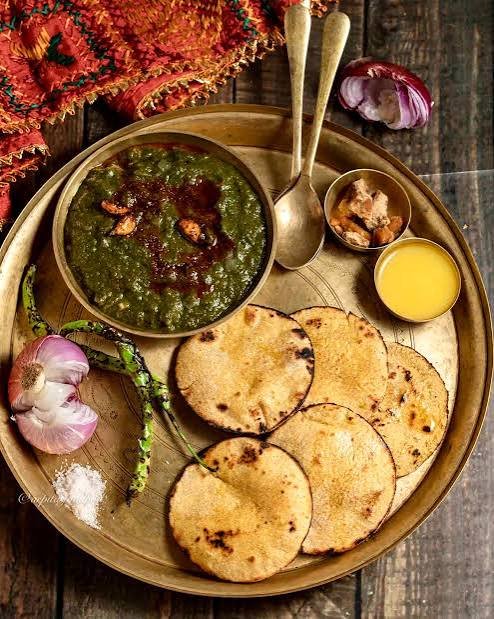
3. Makki di Roti & Sarson da Saag (Punjab)
The Rustic Winter Comfort of the North
In North India, winter is synonymous with the irresistible aroma of Sarson da Saag and Makki di Roti. Hailing from the agrarian heartland of Punjab, this dish is a humble staple of farmers that became legendary across the entire country.
Flavors & Preparation
- Sarson da Saag: The centerpiece is a rich, dark-green gravy made primarily from fresh mustard greens (sarson), blended with spinach, bathua (goosefoot), and radish leaves. The greens are slow-cooked for hours, mashed by hand, and thickened with maize flour (makki ka atta). It is finished with a fragrant temper (tadka) of ginger, garlic, green chilies, and onions.
- Makki di Roti: A unleavened flatbread crafted from yellow cornmeal. Because corn flour lacks gluten, shaping the roti requires skilled hands using water and gentle pressure before cooking it on a hot cast-iron griddle (tawa).
How It Is Served
No plate of Sarson da Saag is complete without a dollop of fresh homemade white butter (makkhan) melted on top, served with a piece of raw jaggery (gur), pickled green chilies, and a glass of creamy lassi.
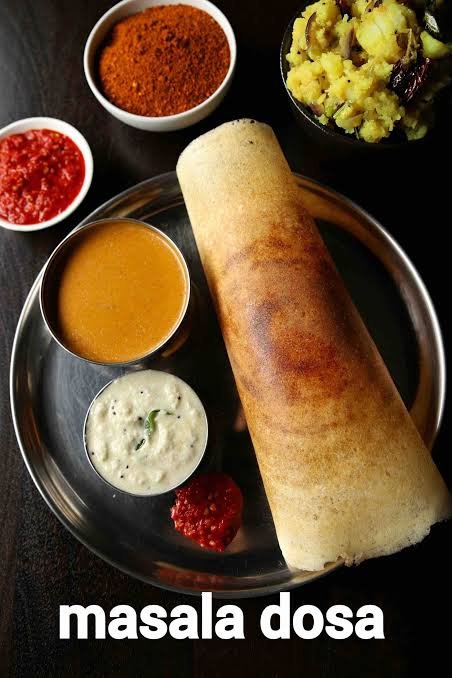
4. Masala Dosa (Tamil Nadu)
South India’s Global Breakfast Icon
While eaten for breakfast, lunch, or dinner across South India today, the crisp, fermented Masala Dosa has its deepest roots in South Indian culinary tradition. Loved worldwide for its delicate crunch and tangy savoriness, it is a masterclass in batter fermentation.
Flavors & Preparation
- The Crepe (Dosa): Made from a blended, overnight-fermented batter of parboiled rice and black gram lentils (urad dal). Spread thin on a scorching flat griddle, drizzled with oil or ghee, it turns golden brown and razor-crisp.
- The Potato Stuffing (Potato Masala): Inside the crepe lies a savory filling made of boiled mashed potatoes cooked with mustard seeds, curry leaves, turmeric, slit green chilies, ginger, and caramelized onions.
How It Is Served
Masala Dosa is served hot off the griddle rolled or folded into a triangle, accompanied by piping hot Sambar (a tamarind-lentil vegetable stew) and fresh coconut chutneys.